Free area guide · Forest Town

Under the CanopyThe Forest Town window handbook

What the highveld sun actually does to a house in a suburb this old, this small and this shaded — elevation by elevation, with the trade-offs written down rather than glossed over.

About 8 minutes to read Written August 2026 Free — no email needed Sources at the foot
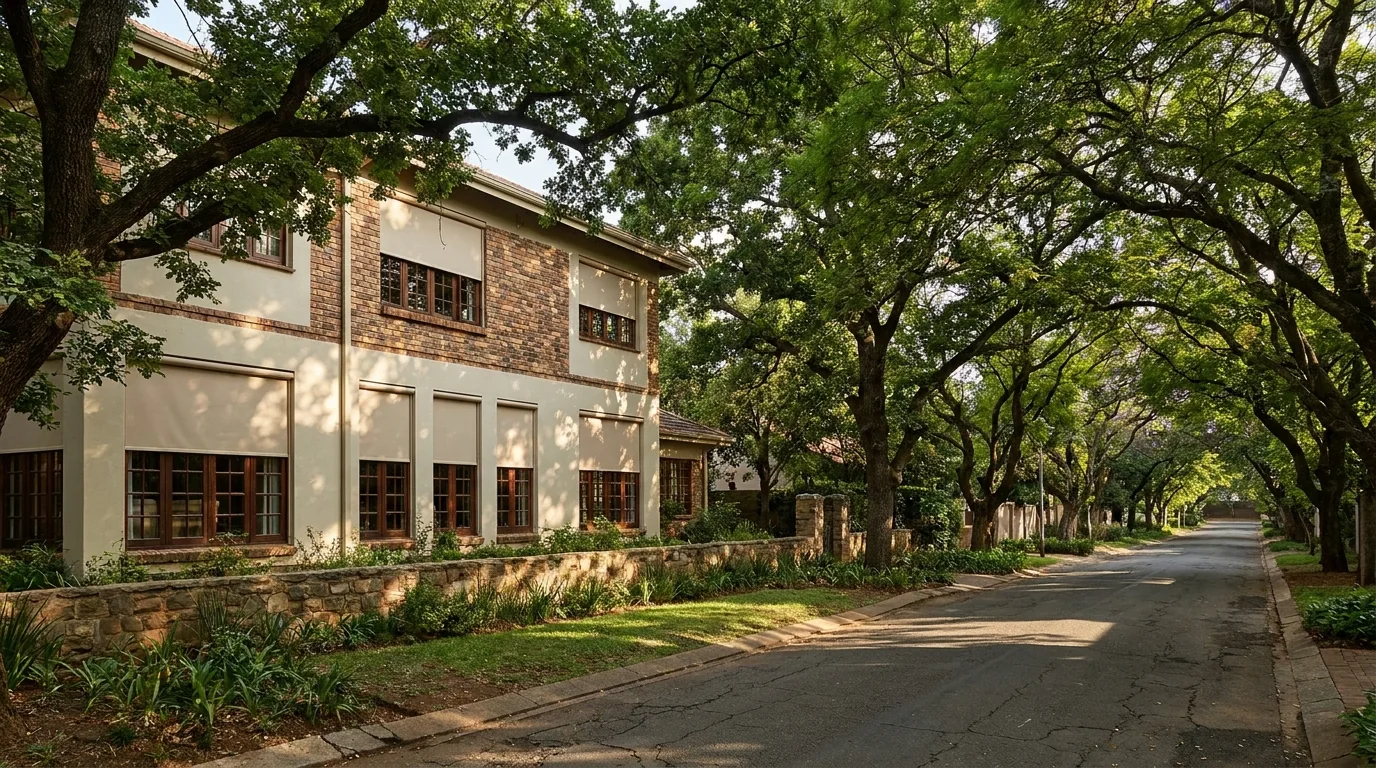
A narrow tree-lined street in Forest Town, Johannesburg, mature oak canopy overhead, a double-storey heritage house behind a low stone garden wall with fixed cream box awnings shading its tall timber-framed windows
Old trees, old openings, and an afternoon sun that arrives sideways.
In this handbook Why here is different What the light does Elevation by elevation What we'd fit, and the catch The 60-year rule What we'd check on site Your two ways forward
01 — The starting point

Why a suburb this small needs its own shading brief

Forest Town was first surveyed in 1908, on land then called Sachsenwald — the timber estate that supplied the mines, and the reason these streets sit under old trees.[1][2] The whole suburb is 0.64 km², squeezed between Jan Smuts Avenue and Oxford Road with the Johannesburg Zoo forming one entire boundary, and at roughly 1,700 people per square kilometre it is denser than Saxonwold or Houghton next door.[1]

The houses are old enough to still have their original openings. Deep reveals, timber frames, proportions an off-the-shelf blind will not flatter. Not a survey of every street — just what a suburb laid out in 1908 tends to look like, and what we find when we measure.

The canopy is already doing half the shading, unevenly. Deciduous trees shade a north window in January and let the sun through in July, so two rooms on one elevation can need different answers depending on what grows outside them.

The stands are small. The neighbour's window is genuinely close on most streets, so privacy and light control are one decision rather than two. The exception is the Zoo boundary, where one side has no neighbouring house and the brief narrows to heat and glare.

02 — The light here

What the sun actually does over Forest Town

Forest Town sits at about 26 degrees south, 1,753 m above sea level.[3] At Pretoria's latitude, fifty kilometres north, the sun stands 87.7° above the horizon at noon on 21 December and only 40.84° at noon on 20 June.[4] Forest Town's own figures land within half a degree of those, and that 47-degree swing splits the year in two.

In summer the noon sun is almost straight overhead, so a north window with any eave above it largely shades itself at midday. In winter it has the sun at 40° and due north, driving light and warmth deep into the room — which, with June nights around 4 °C, you want.[5]

The problem is the afternoon. On 21 December the sun sets on a bearing of 243°, about 27 degrees south of due west.[4] From three o'clock it is low, coming from the west and south-west, arriving nearly horizontally. An overhang cannot block a horizontal ray, and the Pretoria simulations say it plainly: western afternoons run far hotter than mornings.[4] So the west side of a house here needs something at the glass or outside it, not above it.

Three more facts that change the specification

  • Afternoon storms. Johannesburg gets regular daily thunderstorms from November to March, in the afternoons,[5] and Gauteng's severe-storm activity peaks in October and November.[6] Anything folding out over a patio must get back in quickly — which makes a wind sensor a specification item, not an upsell.
  • Hail. Hail occurrence is higher over the Gauteng highveld than over most of the country[6][7] — reason enough to be honest about exterior fabric on an exposed elevation.
  • Altitude and UV. Ultraviolet intensity climbs with altitude.[3] Fabrics, slats and paint on the sunny side age faster here than at the coast, so choose the west-elevation fabric on performance rather than colour.
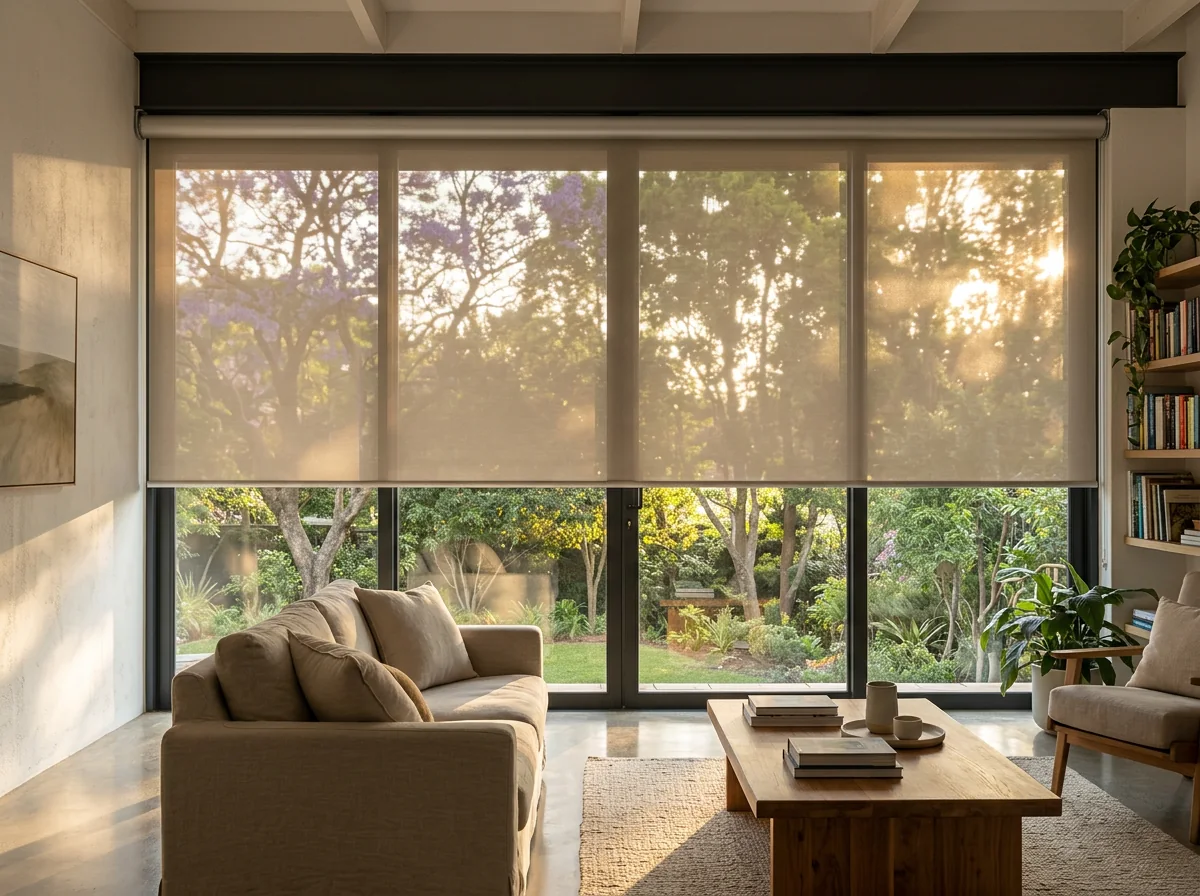
A flat open-weave sunscreen roller blind lowered over a wide west-facing living-room window in late afternoon, cutting the low glare while the garden trees stay visible through the weave
Late afternoon, west elevation. An open-weave sunscreen holds the glare down without blanking out the garden — the compromise most west rooms are actually looking for.
03 — Room by room

Elevation by elevation, and which rooms suffer

Same house, four different problems. Work out which wall a room sits on first.

North — protect in summer, open in winter

North is where the sun lives all winter: high enough mid-summer that an eave does most of the work, then at 40° and pouring in by June.[4]

Living rooms and studies here do best with a venetian — bounce high summer light off the ceiling, open flat in winter. A blockout roller is a blunt instrument on this wall: up or down, and you lose the winter warmth you were entitled to.

Verdict: adjustable beats absolute.
West — the elevation that costs you comfort

Low, near-horizontal afternoon sun from about three o'clock, arriving from 27° south of west at midsummer.[4]

If a west room is unbearable at four, it is because the glass itself is heating and radiating inwards. Interior blinds fix the glare at once and the heat only partly — once the sun is through the pane the energy is inside, and a closed blind absorbs it.

Verdict: exterior shading if you can; a proper sunscreen if you can't.
East — glare first, heat second

The same geometry mirrored, but into a house that cooled overnight. Bedrooms get woken early in December; kitchens take an hour of hard glare and then it is over — so, usually, a blockout in the bedroom and something you can see through in the kitchen.

Verdict: solve for glare and sleep, not heat.
South — cool, even, and the one people forget

Almost no direct sun for most of the year, so these rooms hold the steadiest light in the house — and are the coldest in winter.[5]

Shading is rarely the problem here. Heat loss through old single glazing usually is, and so is privacy from a close neighbour.

Verdict: think warmth and privacy, not sun.
Optional

Want this marked up for your own house?

Tell us which rooms are the problem and we'll send you this same handbook with your elevations noted against it — which windows we'd treat first, and what we'd be weighing up on each one.

It is an email, not a visit. Nobody phones you about it.

Your details are used only to send you this handbook and, if you ask for it, to arrange your free in-home measure. They are never shared with anyone else. (POPIA)

04 — The specification

What we'd fit here, and the catch with each

Each is right somewhere and wrong somewhere else.

Timber venetian blinds

North · heritage windows

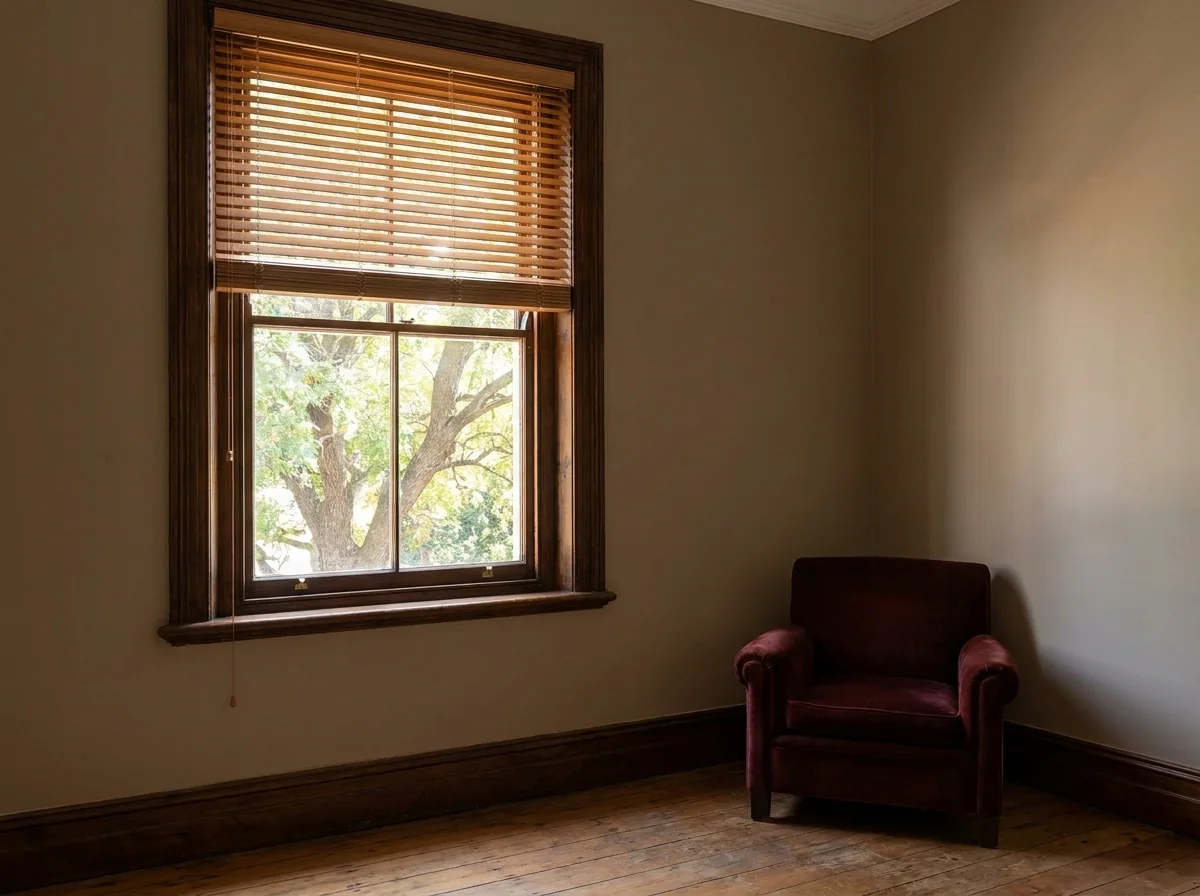
The canopy gives dappled, moving light, so the useful control is angle, not coverage: a venetian throws high summer sun onto the ceiling and opens flat in June. Timber also sits against an old timber reveal in a way aluminium does not.

The trade-off

Heavier and dearer than aluminium, and a very wide window has to be split across one headrail. Above a bath or sink, choose aluminium: timber and steam age badly together.
Sunscreen roller blinds

West & east · garden views

One flat sheet of open-weave fabric on a tube. It cuts the glare and a useful share of the solar gain while leaving the garden visible — no more curtains closed at four o'clock.

The trade-off

It reverses after dark: lights on, and you are the one on display. On a close stand we would pair it with a blockout on the same window rather than pretend one fabric does both.

Blockout roller blinds

Bedrooms · east

A flat sheet, no folds, sitting inside an old reveal without fighting the frame's proportions. Against a December sunrise on an east bedroom window, the most effective thing there is.

The trade-off

Binary — down is dark, up is everything — so the wrong tool for a north living room. Without side channels, light always finds the edge of the reveal.

Day/night blinds

Street-facing · close stands

Sheer bands and solid bands sliding past each other, so you hold privacy from a neighbour three metres away and keep usable daylight — often the honest answer on the smaller stands here.

The trade-off

More mechanism than a plain roller, so more to go wrong across ten years, and never fully blockout. Not for a bedroom you want properly dark.

Cellular honeycomb blinds

South · single glazing

The cells hold a layer of still air against the glass — the cheapest thermal improvement you can make to an old single-glazed window without touching the window. No permit, no builder, no change to the facade.

The trade-off

A soft product, so not for a busy kitchen — and not a heat-rejection answer on a hot west window. The gain sits on the winter side of the ledger.

External venetian blinds

Hard west glass

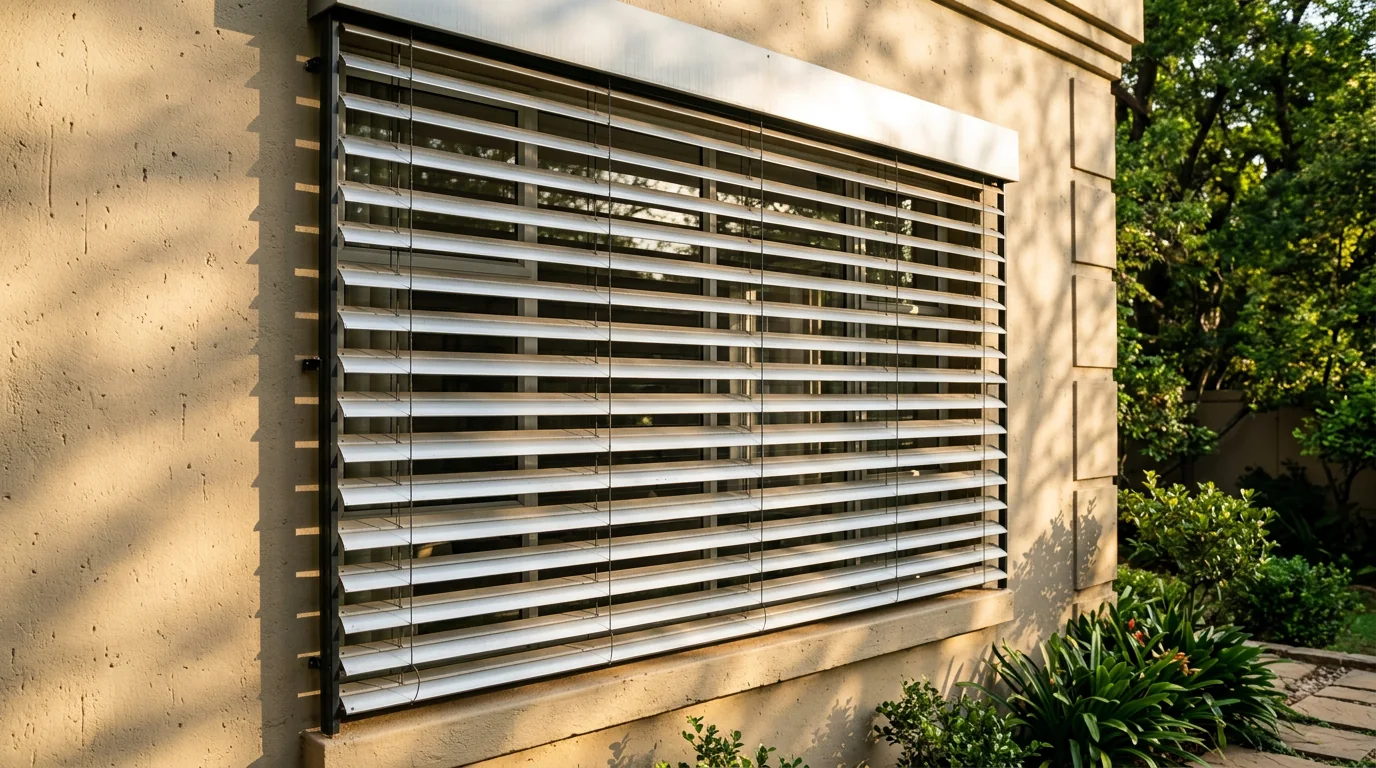
Aluminium slats in side guides, outside the glass, tilting the sun away before it reaches the pane. On a hard west elevation we would specify these over an interior blockout roller: stopping the heat outside the glass keeps a room cooler than absorbing it inside, where the pane still warms and radiates. You keep a view through the slats.

The trade-off

It changes the facade from the street, which in a suburb this old is a conversation to have first — see below. And it is exterior, in a hail belt,[6][7] so a motorised version should retract on a wind signal.

Roller shutters (shading)

West · the busier edges

Rigid aluminium slats rolling down from a headbox outside the building, covering the whole opening — heat and glare handled outside the glass, with a real drop in road noise.

Shading, not security. These are made for sun, heat and glare control. They are not security-rated shutters — a different product, which we can quote on request.

The trade-off

The most visible exterior change here, and the headbox has to live somewhere — on an old facade a design decision, not a measurement.

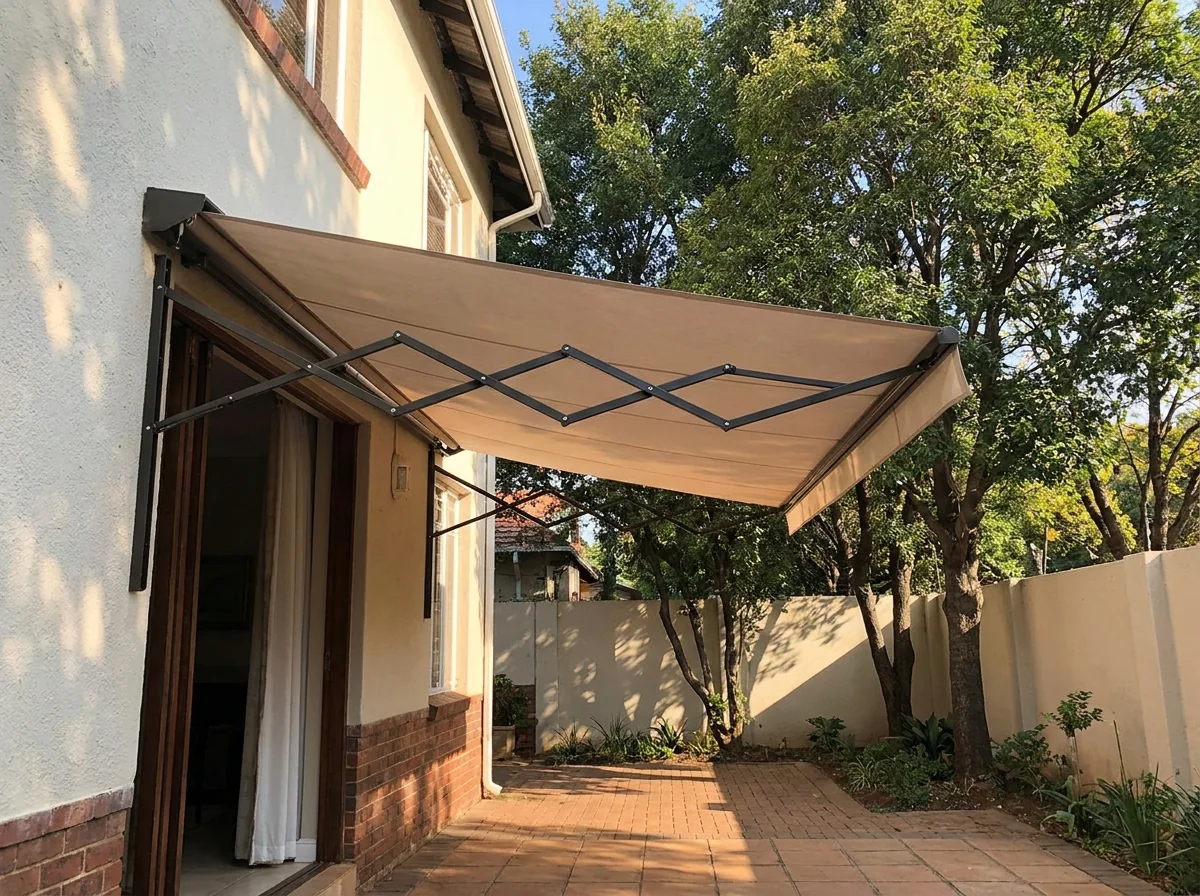
Folding-arm awnings

Patios and stoeps

Turns a baking paved patio back into a usable room, then folds away for the winter sun. Where the garden is the extra room, often better value than anything you could do to a window.

The trade-off

Storms roll through most summer afternoons[5] and Gauteng sits in the higher hail zone,[6][7] so we would specify a wind sensor and a cassette that closes over the fabric.

Also on the list below: aluminium venetians where timber would not last, zip screens to hold a stoep against wind, motorisation for windows an old house puts out of reach, and skylight and shaped blinds for gable glass.

External venetian blind mounted outside a west-facing window on a plastered Johannesburg house, wide aluminium slats held in slim vertical side guides and tilted to throw shade onto the wall before the sun reaches the glass
Stopped outside the glass. External venetian slats in side guides, tilted against a low west sun — the heat never gets to the pane in the first place.
05 — The local constraint

The 60-year rule, and what it means outside

Forest Town was surveyed in 1908,[1] so a great many houses here are over sixty years old — which matters more than owners realise. Section 34(1) of the National Heritage Resources Act 25 of 1999 says no person may alter or demolish any structure, or part of one, older than 60 years without a permit from the relevant provincial heritage resources authority.[8] The Act defines "alter" broadly: any action affecting the structure, appearance or physical properties of a place.[8] Age alone triggers it — the house need not be declared or listed.[9] In Gauteng the authority is PHRA-G.[10]

  • Interior blinds fitted into an existing reveal do not alter the structure, and change nothing from the street.
  • Exterior products — awnings, external venetians, roller shutters, zip-screen channels — do change it, and on a house of that age that is worth establishing first.

We fit blinds; we are not heritage consultants. On the measure we will say plainly which options touch the outside of the building, so you can take that question to the right person.

Renovating? SANS 10400-XA:2021 requires a fenestration calculation once glazing exceeds 20% of floor area — it was 15% in the previous edition — and no longer treats west, north and east glass differently for solar heat gain.[11] Ask your architect early how your shading is being counted.

A tall heritage timber-framed window in an old Johannesburg house fitted inside the reveal with a timber venetian blind, its flat wooden slats tilted half open to angle dappled light from a large tree outside across a wooden floor
Inside the reveal. An interior venetian works with the original opening and leaves the facade exactly as it was.
06 — The honest limit of a guide

What we'd still need to check on site

Everything above is what we know about Forest Town. What we can't know is your house — and five things decide the specification.

Reveal depth, and whether it's square

Depth decides whether a blind fits inside the opening at all, and old openings are rarely square. A 12 mm difference top to bottom is normal, and it changes how the blind is made.

What the wall is actually made of

Plaster over brick, plaster over stone, or a later stud addition. The existing fixings decide what can hang there — and for exterior products, whether the job is possible.

Which way it really faces — and what's outside

We take a compass reading at the window: twenty degrees changes the recommendation between west and south-west. Then we look out of it, because the tree doing half your shading differs at every window — and half of it falls off in winter.

Where the power is

For anything motorised, the route from a power point to the head of the window is the real constraint — a walk-around with a torch in an older house, not a guess over the phone.

Wind exposure on the patio

Awnings and zip screens live or die on this. A sheltered courtyard and an open west corner need different products and sensors — obvious in two minutes on site.

A folding-arm awning with a flat fabric canopy extended over a small paved patio at the rear of an older Johannesburg home, its articulated metal arms visible beneath the canopy, mature garden trees and a high painted wall behind
The patio question. Projection, fixing height and wind exposure are all decided standing on the paving — never from a floor plan.
07 — Two ways forward

Book the free expert measure

A consultant comes to the house with fabric and slat samples, measures every window properly, and leaves you with a written quote per window. It costs nothing and commits you to nothing. If you'd rather have a rough number first, the ballpark tool underneath the form does that instead.

Free in-home measure and a written quote per window
No call centre — a real consultant comes out
Nothing is made until you've approved the quote
Still deciding? Say so on the form and we'll leave you be

Anything you ticked while reading is already carried into the form — you don't have to type it again.

What are you interested in? (tick any)
Want a ballpark figure first? Open this — about two minutes.

Forest Town Blinds — window list

Walk the house, fill this in by hand, then type it into the form on foresttownblinds.co.za when you get back. Measure width first, then drop, in millimetres.

Pop in rough sizes and we'll send a budget range by the next working day. Not sure how to measure? Leave it blank — our consultant measures for free and you'll get exact per-window pricing either way. This is entirely optional, and nothing here is binding.

Room Width (mm) Drop (mm) Inside or outside the reveal Product Remove

Nothing on the list yet — and it stays entirely optional.

Anything you enter here travels with your enquiry as plain text. No uploads, no third-party services, nothing stored anywhere else. If photos would help, a consultant will simply ask for them in the reply.

Your details are used only to arrange your free in-home measure and consultation call-back, and are never shared with anyone else. If you tell us you're still researching, we won't call you. (POPIA)

Neither, for now

Just take the handbook, marked up

Not ready for a visit or a number? Tell us which rooms are the problem and we'll email you this handbook with your own elevations noted against it. Nothing is booked, nobody phones.

Used only to send you the handbook. Never shared with anyone else. (POPIA)

Working out

Sources

Every climate, geography and legal claim above traces to one of these. Where we've reasoned rather than cited, we've said so in the text.

  1. Forest Town, Gauteng — founding survey of 1908 on the Sachsenwald land, suburb area of 0.64 km², 2011 population density of ~1,700/km², and its boundaries between Jan Smuts Avenue, Oxford Road and the Johannesburg Zoo. en.wikipedia.org/wiki/Forest_Town,_Gauteng
  2. Forest Town area profile — the Sachsenwald timber estate was planted from the late 1800s to the 1920s to supply timber to the mining industry. seeff.com/area-profiles/johannesburg/forest-town
  3. Johannesburg — coordinates 26°12′S and elevation 1,753 m. en.wikipedia.org/wiki/Johannesburg
  4. "Sun, shade and natural daylight in South African town planning, with emphasis on Pretoria" — solar noon elevation of 87.7° on 21 December and 40.84° on 20 June, sunset azimuth of 243.35° in December, and the finding that western-exposure afternoons run far hotter than mornings. scielo.org.za — S2415-04952018000200005
  5. Johannesburg climate — subtropical highland (Köppen Cwb), regular daily afternoon thunderstorms from November to March, and winter overnight lows of about 4.1 °C in June and July. en.wikipedia.org/wiki/Johannesburg
  6. "Characteristics of warm season supercell thunderstorms over the Gauteng and Mpumalanga Provinces of South Africa", University of Pretoria — Gauteng's supercell frequency peaking in October and November, activity peaking in the middle-to-late afternoon, and higher hail occurrence over the Gauteng highveld. repository.up.ac.za
  7. EUMETSAT case study — a major Gauteng hailstorm, on the severity of highveld hail events. user.eumetsat.int — massive hailstorm over Gauteng
  8. Section 34(1), National Heritage Resources Act 25 of 1999, and the Act's definition of "alter". theheritageportal.co.za — heritage processes FAQ
  9. The 60-year protection is triggered by age alone, not only by declared or listed status. thetownplanner.co.za — the NHRA and your home
  10. Provincial Heritage Resources Authority Gauteng (PHRA-G). sahris.sahra.org.za — PHRA Gauteng
  11. SANS 10400-XA:2021 (Edition 2) — the fenestration threshold rising from 15% to 20% of floor area, and the removal of the west/north/east distinction for solar heat gain. roosarchitects.co.za — summary of the revised SANS 10400-XA

Two honest caveats. The solar figures in source 4 are calculated for Pretoria at 25.7° south; Forest Town sits at roughly 26.2° south, so its own angles differ by well under a degree — we've quoted the published Pretoria numbers rather than invent our own. And we could not retrieve the full text of source 6, only its published abstract, so we've used it to support the hail and storm-timing points rather than to carry them alone.

Now let's look at your actual windows.

Free in-home measure, a written quote per window, and one of our expert consultants on the phone before anything is fitted.